Blog
AI Software Reviews: How to Spot the Honest Ones

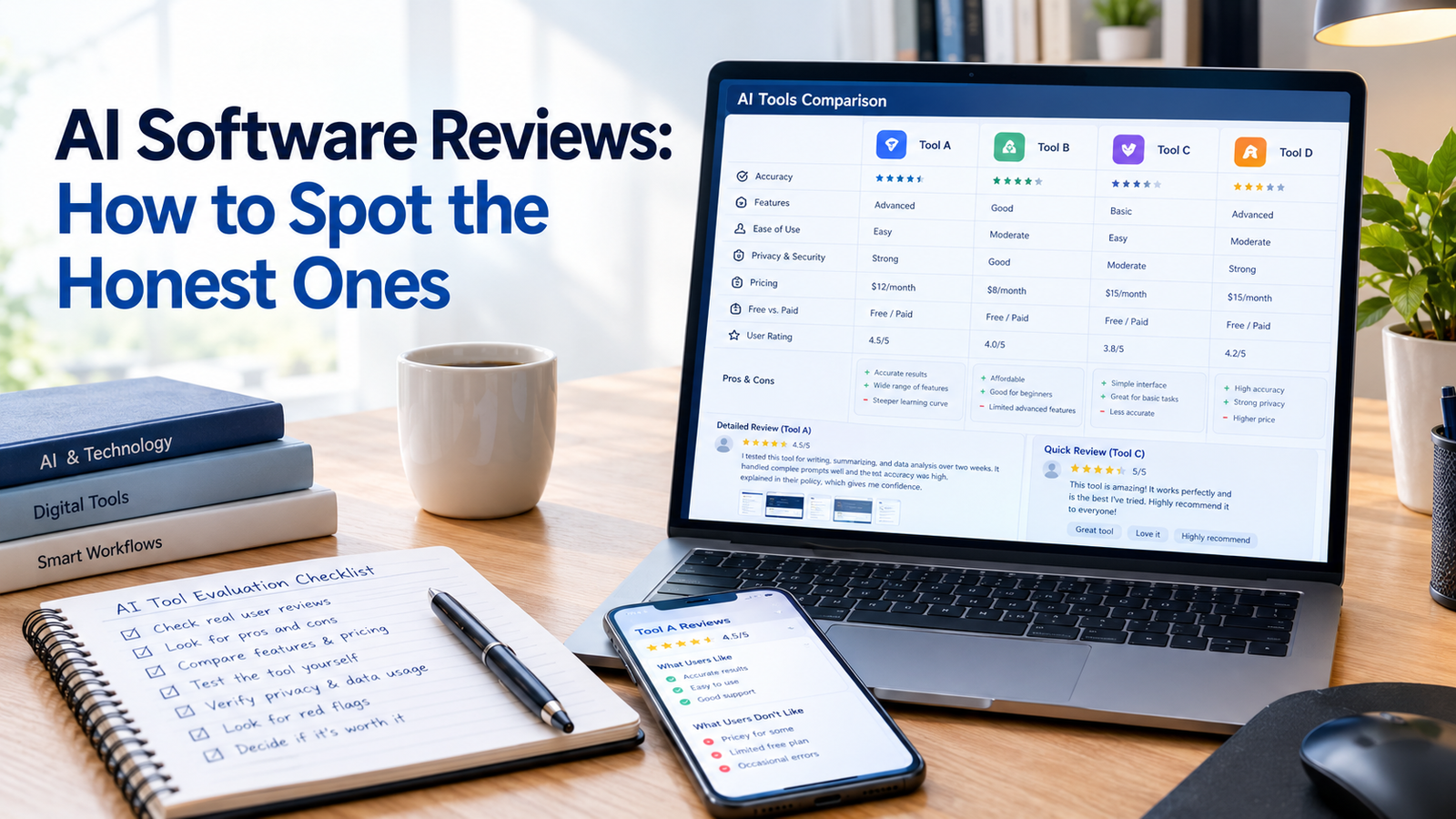
Picture it. You want an AI tool to help with your emails, so you google it. Five tabs open, and five sites name five different “best” picks. Every one of them sounds totally certain. Annoying, right?
So who do you believe? Maybe nobody, at least not yet.Mastering AI software reviews is a craft, and it beats all tools by itself. Hang around for a while, and you’ll be able to tell who to listen to, recognize scams, and properly test out a tool before buying it.
Why AI software reviews can’t all be trusted
Every review is one person’s opinion. Some of those people used the tool for a month. Others skimmed the sales page and padded it out to five hundred words.
Then there’s money. There are many websites which make money on clicks and purchases. This is not necessarily a bad thing, but it does have an indirect effect on what is being reviewed. Moreover, these review services change very quickly. A review written last spring can refer to some function that has been taken away, some subscription at a different price, and other limitations that may no longer apply.
How to read AI software reviews: four quick checks
First, who reviewed the product? A true review provides evidence that the person had contact with the software: screenshots, real outputs, and description of tasks performed. “Powerful and easy to use” means nothing.
Second, take a look at the date. The product is constantly updated, so the more recent date or “updated” is better.
Third, pay attention to criticism. An honest writer got annoyed at something. If a review has zero flaws, it’s probably an ad.
Fourth, follow the money. Good sites say how they earn it, usually near the top. A page packed with buy buttons and no word about it? Be careful.
How to spot fake AI software reviews
Fake reviews are a big problem, and the government has noticed. The FTC’s rule on consumer reviews took effect on October 21, 2024. It bans fake or false reviews, paying for reviews that are supposed to say something specific, hidden reviews from insiders like employees, and threats aimed at people who post honest ones. Fake social media followers are covered too. Courts can hand out civil penalties for knowing violations, according to the FTC’s guidance on its reviews rule.
A rule can’t catch everything, though, so keep your own eyes open. Here’s what makes me suspicious: a pile of five-star ratings that all sound the same, praise with no details, a burst of new reviews in a few days, and a company that answers every complaint with one copied reply. Any one of these means little. Several at once? Step back.
Which AI software reviews are worth your time?
Not every source deserves the same trust. Expert write-ups go deep and often compare tools side by side, but some are tied to affiliate money. User reviews, like the ones on app stores and forums, show real life.They usually come from someone who is either extremely happy or extremely angry about something, so start reading the middle ratings first. Testimonials from a company will be picked themselves, so there is nothing bad you will see. Video reviews prove that a tool works, but find out if the author received payment for that.
Use more than one source. When an expert, a user, and a video all gripe about the same thing, believe them. A flaw that three AI software reviews point at is hard to wave away.
What a good review should cover.
The best AI software reviews answer what you’d ask a friend over coffee. What did the writer use it for? How often was it wrong? What happens to my data? How much will it cost once the free part is over? Can I bail out without a fuss?
Accuracy is critical. These products may appear highly confident and end up being wrong; thus, a review featuring factual errors is more valuable than a showcase of best qualities. Also, don’t forget about the privacy aspect. While you may be tempted to paste some client names or documents into the application, make sure that the company uses whatever you input. This information is found in the privacy policy, not in the advertisement.
The National Institute of Standards and Technology of the USA has developed the AI Risk Management Framework, which is voluntary and published back in January 2023. The document targets those who create and implement AI technology, however, one recommendation can be taken by AI buyers: is it reliable?
Test the tool yourself.
AI software reviews get you to a shortlist. Your own trial makes the call.Create a free account and try the three tasks again using each software. Time yourself and keep track of the errors made. Which was the least troublesome to correct? Two software programs that seem equally impressive on paper may be worlds apart once in use. A note sheet will assist in this process: each line is for each software, the task performed, minutes saved, errors and price per month.
Next, read the pricing page carefully, keeping an eye out for the restrictions, features behind the paid plan and trial end-of-trial consequences. Set a calendar reminder two days before just in case you forget to cancel your subscription.
Running a business? Our best AI software for small businesses guide shows how to match a tool to your busiest daily task.
Free vs. paid AI software
Free plans are perfect for testing. They usually come with caps, like fewer uses or fewer features. Go paid once those caps start blocking real work, and not a day sooner. If you only need a tool now and then, free may be all you ever need. Here’s a handy rule: name the one feature you’d pay for. Can’t name it? Stay free.Prices jump around between tools, so we won’t quote any. Look at each company’s pricing page the day you buy.
Your next step
Pick one tool you’re curious about. Open its reviews and see where they agree, then see what only one of them brings up. After that, take it for a spin on a free plan, and keep notes. In the future you will be grateful.
Choosing between chatbots? Try our best AI chatbot 2026 guide next. Good AI software reviews make the choice easier. Bad ones make it expensive.
FAQ
Are AI software reviews reliable?
Some of them are legitimate and others are not. Believe those that have evidence, highlight their cons and if they have affiliate links disclose them. You can also compare two or three of them at least.
How can I recognize fake AI tool review?
Fake reviews have some specific features like vagueness, similarity in wording, and a sudden spike in positive feedback. There is no single sign, but a combination of several is suspicious. The FTC prohibits such reviews, but they still appear.
How many reviews of AI software do I need?
Five or even three are sufficient, but only if they are from different sources. Continue until you notice repetition of arguments.
Is free AI software sufficient?
It is quite suitable for light and infrequent usage. Switch to paid one as soon as limitations of free version begin to affect your productivity.
What is the price of AI software?
The price range depends on the tool and subscription model. Look at the pricing page before signing up.
