
Blog
Best Wearables for Sleep Tracking in 2026

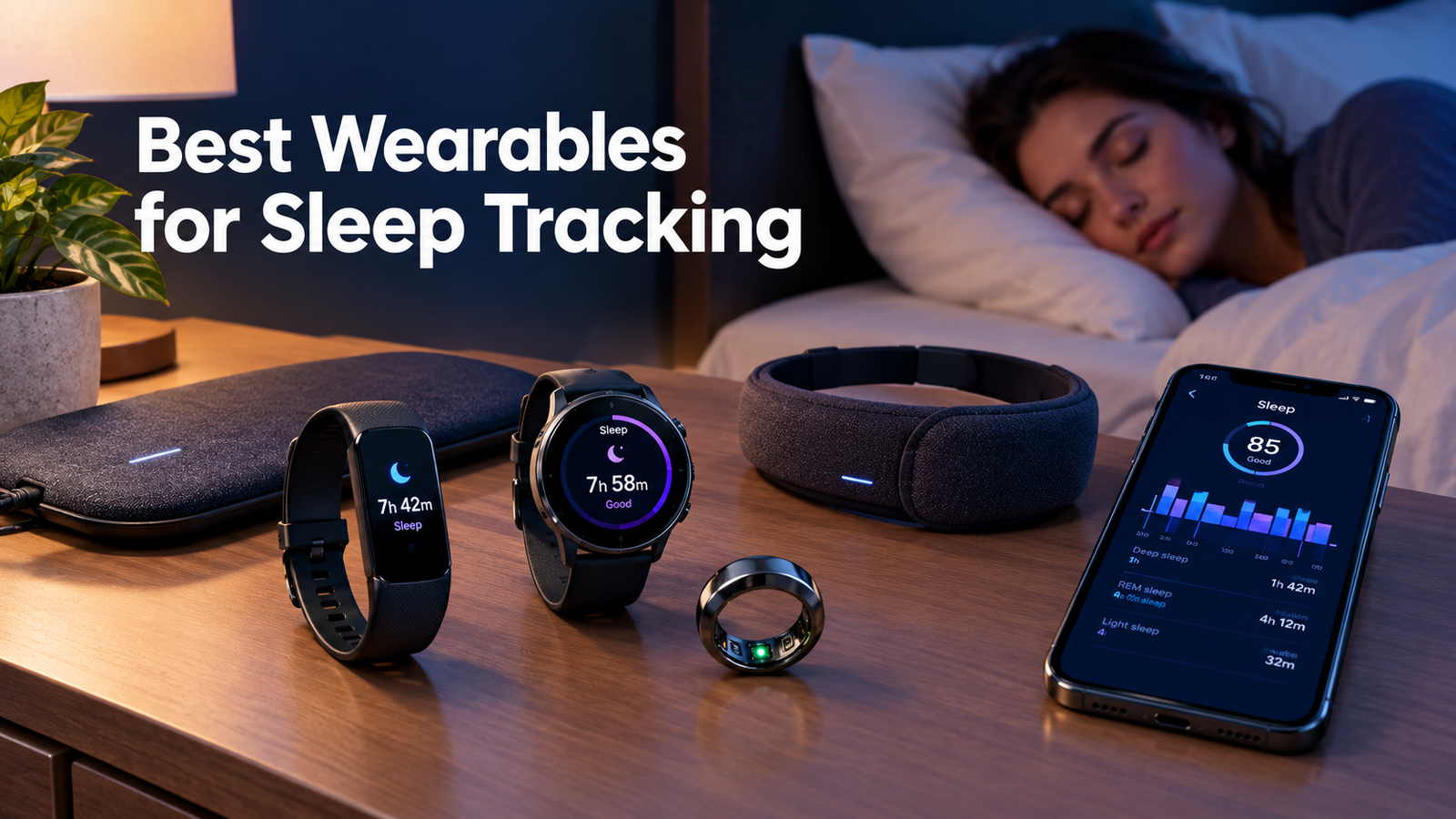
I slept for eight hours last month and yet I was still feeling that I had been run over by a truck. This is when I began focusing on my sleep trackers rather than relying on my alarm clock.Turns out hours in bed and actual rest are two very different numbers, and a wearable is the easiest way to see the gap.
I’m going to walk you through the best wearables for sleep tracking right now, what each one is actually good at, and where I’d steer you away from one. No fluff, just what matters if you’re trying to sleep better.
Why Bother Tracking Your Sleep At All?
Here’s the thing nobody tells you: you can’t feel your own sleep stages. You just feel the result the next morning. A tracker fills in that blind spot. Mine caught something I never would’ve guessed on my own; a late-evening workout was pushing my deep sleep back by almost an hour.
That’s not magic. It’s just data you couldn’t get any other way without hooking yourself up to a lab machine. The National Sleep Foundation says most adults need seven to nine hours a night, but honestly, the quality of those hours matters just as much as the count. A tracker is really the only affordable way to see quality, not just quantity.
The Main Types You’ll Run Into
Rings, watches, bands, headbands, and even mats you slide under your sheet. It’s a lot. Here’s how I’d sort them.
Smart rings are tiny and easy to forget you’re wearing. A sensor against your finger picks up heart rate and skin temperature, then estimates how you moved through the night from that.
Watches and fitness bands sit on your wrist. They usually pack in more sensors than a ring, but some people (me included, some nights) find a watch annoying to sleep in.
Headbands go a step further and read your actual brainwaves, called EEG. That’s a more direct read on sleep stages than guessing from heart rate alone. You pay more for it, both in dollars and in how weird it feels the first few nights.
And then there’s the mattress mat option. No wearable at all. You just plug it in and sleep like normal.
The Picks Worth Actually Considering
Oura Ring 4. They forget that they even have this thing on after just a couple of days, including me. The device measures your sleep cycles, body temperature, and resting heart rate and gives a readiness score every day. The only thing I can complain about is that you have to subscribe to get all these insights, despite having the ring.
WHOOP 5.0. No screen, and that’s on purpose. This one’s built for people training hard who need to know when to actually back off instead of pushing through another workout. If you don’t care about recovery scores, skip it.
Fitbit Charge 6. This is the one I’d hand to someone who wants sleep data but doesn’t want to think much about it. Step counts and workouts come bundled in, and it’s slim enough on the wrist that it doesn’t feel like wearing a small computer to bed.
Muse S Athena. The EEG headband route. Because it reads brain activity directly instead of estimating from your pulse, it reports some of the highest sleep stage accuracy you’ll find in a consumer device. It also plays audio cues meant to help you drift off faster, which either works for you or feels a little odd. Depends on the person.
Withings Sleep Mat. For everyone who simply can’t be bothered putting on anything at all. Slide it under your mattress, plug it in, and you’re good to go. No charging, no clasp, nothing on your skin.
Curious how these stack up on price and specs? Our wearable tech buying guides go deeper on each one.
Ring or Watch? The Question I Get Asked Most
Truthfully, it all boils down to comfort. The ring becomes invisible once you get accustomed to it. There is no strap pressure, no light shining on the screen. The watch offers you a wider array of sensors and larger screen to check metrics while awake, but there are certain individuals who cannot fall asleep with anything on their wrist.
Should sleep comfort be your main concern, then choose the ring. Otherwise, if you need the same device for workouts, notifications, and sleep tracking, opt for the watch/band.
How Accurate Is Any Of This, Really?
Let’s be honest about the limits. Nothing you strap on at home matches a real sleep lab test, called a polysomnogram, where wired sensors sit directly on your scalp. Wearables are guessing your sleep stages from heart rate and movement, which gets close but isn’t the same thing.
Some of the newer EEG headbands report accuracy in the high eighties to mid nineties against lab results, which is genuinely impressive. Ring and wristband trackers usually land lower, somewhere in the seventy to eighty percent range for sleep stage accuracy. That’s still plenty useful for spotting trends over weeks, even if one single night’s number isn’t gospel. The Centers for Disease Control and Prevention points out that consistent patterns over time matter more for your health than any one night’s reading anyway.
There is no one correct answer. It all comes down to whether you would prefer wearing a ring, wearing a wristwatch, or neither.Take a look at our full roundup of the best wearables for sleep tracking to compare specs and real user reviews before you decide.
Questions To Ask Yourself Before You Buy
Are you looking to go without a subscription, or do you feel comfortable paying each month for more insight? Both Oura and WHOOP have monthly subscriptions.
How much do you care about battery life? Rings often go four to eight days between charges. A bright smartwatch screen might need juice every day or two.
Would you like to have the fitness functions included during daytime or just sleep tracking? In case you need the latter, then maybe a simpler gadget at a lower cost would work for you instead of a multifunctional smartwatch.
Frequently Asked Questions
Do sleep tracking wearables actually work?
For spotting patterns, yes. Mine showed me things about my own habits I wouldn’t have noticed otherwise. Just don’t expect lab-level precision from a ring or watch.
Which wearable tracks sleep without a subscription?
The Withings Sleep Mat and the Muse S Athena both give you full sleep data with no required monthly fee, unlike Oura or WHOOP.
Are rings more accurate than watches for sleep?
Not necessarily more accurate on paper, but people tend to wear rings more consistently since they’re easier to forget about overnight. More consistent wear usually beats a slightly better sensor.
What do these devices typically cost?
Basic fitness bands start under $100. Devices like the Oura Ring or Muse S Athena can run $300 or more, sometimes with a subscription on top of that.
Can a wearable replace a doctor for sleep problems?
No, and I wouldn’t try. These are great for spotting patterns, but they can’t diagnose something like sleep apnea. If you’re waking up gasping or exhausted despite a full night in bed, talk to an actual doctor.
