
Blog
Gadget Deals USA: How to Actually Find the Good Ones in 2026

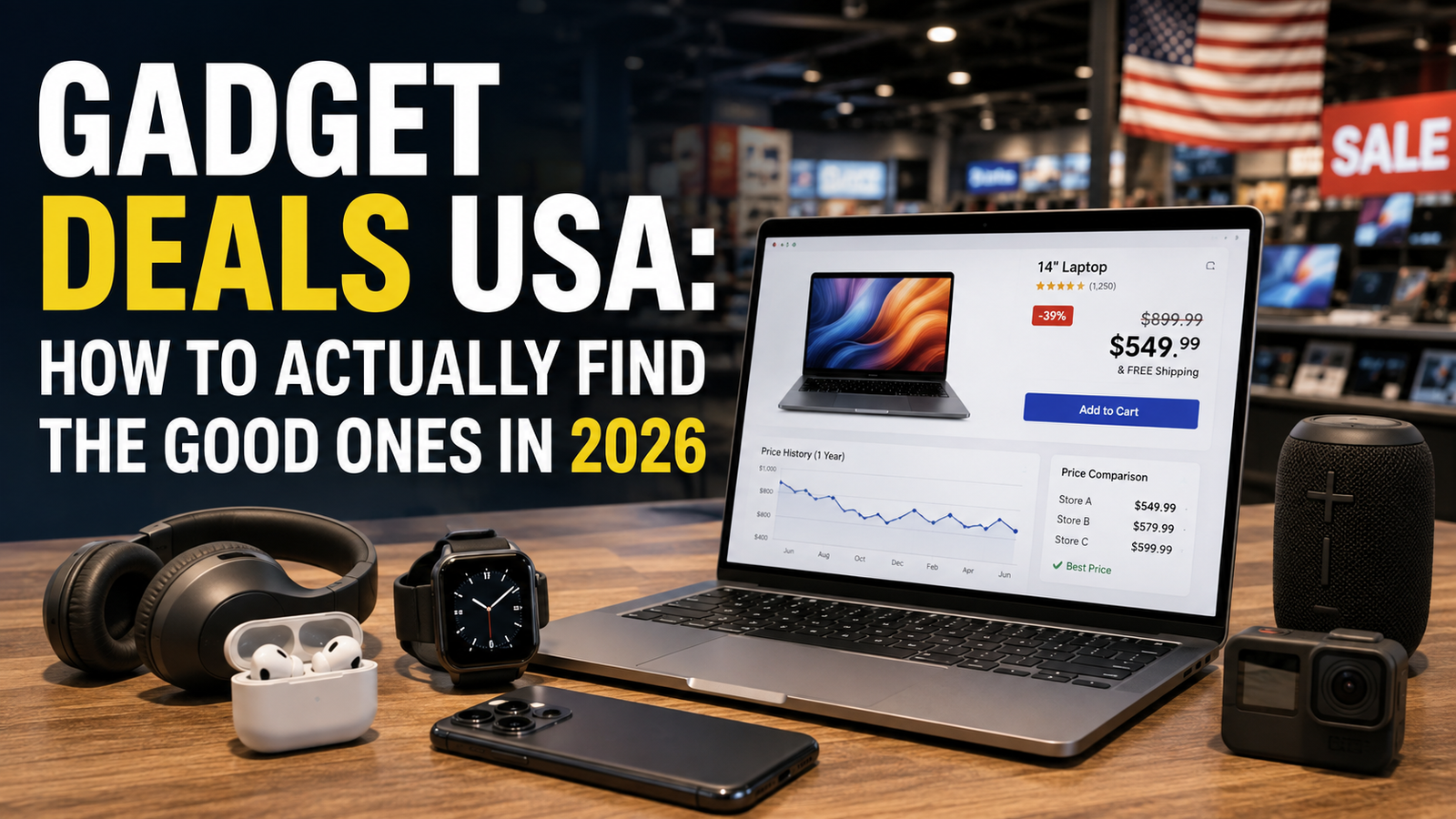
A laptop pops up marked “was $899, now $549.” Your brain says, “Buy it now.” Was it ever really $899, though? Probably not. A retailer bumps the sticker price up for a few days, “discounts” it back down to roughly what it always cost, and calls that a bargain. That’s the trick behind a lot of what gets called a sale. It’s why finding real gadget deals USA shoppers can trust takes more than clicking the first banner that shows up.
So here’s the actual playbook: when tech goes on sale for real, where to double-check a price before buying, and how to catch a discount that was never a discount to begin with.
When Gadgets Actually Go on Sale
Retailers don’t discount electronics whenever they feel generous. There’s a pattern. Once you see it, the “limited time” panic stops working on you.
Late November wins, no contest. Black Friday and Cyber Monday will always be the most aggressive sales of the year, as vendors are liquidating their older products ahead of receiving new stock in January. TVs, laptops, and headphones are all the hardest hit in that time frame.
Then there’s July, which offers Amazon’s “Prime Day.” Want a laptop before Christmas? Back-to-school season, July through August, is your move. Best Buy and Target fight hard for student budgets during those weeks and will often throw in a case or a software subscription just to close the sale.There’s also Amazon’s October event, sometimes called Prime Big Deal Days. Think of it as the opening act before Black Friday, a good option if you’d rather buy early and skip the holiday rush.
Where to Verify Prices
One store isn’t enough. The exact same gadget can differ by fifty dollars or more between two retailers on the same afternoon. Annoying, but true, and it’s the whole reason price comparison sites exist.
Start with a price history tool before trusting any “sale” tag. They measure how prices of a product fluctuate over months, which allows you to assess in about ten seconds whether or not the current price is really low or just inflated to appear so.
Afterward, you can compare two or three competing online stores. Amazon, Best Buy, Walmart, and Target all offer competing sales continuously, although their quality is different depending on the category:
- Amazon will beat any competitor in hardware itself.
- Best Buy and Target will beat it at the sales of TVs and laptops over the back-to-school period and Black Friday sales.
- Online manufacturer stores (Apple, Samsung, Dell) organize direct sales that do not show up anywhere on the websites of the retailers.
How to Spot a Fake Discount
A study by Consumers’ Checkbook measuring prices at 25 top retailers over six months confirmed suspicions of many consumers.. Most of those “was” prices were rarely, if ever, what people actually paid. The sale sticker is often just a marketing copy wearing a discount costume.
There’s an actual rule here, not just a vibe. The Federal Trade Commission’s Guides Against Deceptive Pricing state that a “former price” used in a sale comparison has to be a real price the item sold at for a meaningful stretch of time, not a number someone made up to make the markdown look bigger. You can read the full guidance straight from the Federal Trade Commission if you want the fine print.
A few tells:
- The item is “on sale” nearly every single time you check it, which usually means the regular price was never real.
- The percentage off sounds huge, but the dollar savings are tiny. “70% off” on a $12 accessory that normally runs $15 is not the win it sounds like.
- Watch for the countdown timer that resets. Nothing gives away fake urgency faster than a “sale ends in 2 hours” banner that’s somehow still counting down tomorrow.
A Simple Buying Checklist
Two minutes at most, and we’ve saved ourselves some cash on more than one occasion.
- Find out the pricing history for that particular model, not the entire range. Minor variations in numbers can conceal larger differences in pricing..
- If a major sale window is a few weeks out, wait. Today’s “deal” is almost never the best one you’ll see all year.
- Read the return and warranty terms first, especially on refurbished electronics. An inexpensive price for a non-refundable gadget is not a good deal if the gadget breaks in one month’s time.
- Rather than doing manual price checks, set up a price alert.
- Most tracking tools will ping you the moment something actually drops below its historical average.
The Bottom Line
None of this requires being some deal-hunting genius. It just means checking the price history before getting excited about a red tag, and remembering a countdown timer is marketing, not physics. Learn the sale calendar. Verify before trusting a discount claim. Lean on the FTC’s own pricing rules when something feels off. For more buying guides and honest gadget reviews, check out Gadget Gridz’s AI and software coverage or browse the latest gadget reviews on the blog.
FAQ
When is the best time to find gadget deals in the USA?
Late November by a landslide. The discounts from Black Friday and Cyber Monday are the biggest on electronics. Can’t hold out until then? Amazon Prime Day in July is your best chance, particularly for Amazon-branded products.
How do I know if a gadget discount is real?
Pull up the price history. If a “sale” price is basically what the thing always sells for, that’s not a deal, that’s a marketing trick with a red tag on it.
Are back-to-school laptop deals worth waiting for?
If you need a laptop before November, yes. The best time after Black Friday to get deals on your laptop is July-August.
Is Amazon always the most affordable source of electronics?
Not always. They often do a better job with their own products but are outmatched by Best Buy and Target in pricing TV and laptop deals.
What does the FTC say about fake sale prices?
A “was” price has to be a price the item actually sold at for a real stretch of time. Inventing a high number just to make a markdown look bigger is exactly what the FTC’s pricing guides prohibit.
